5 phone lock boxes for the home
A phone lock box is the simplest idea in the whole "use your phone less" world. You put the phone somewhere, and it stays there for a while.
That's it. No settings to dig through, no limits to raise when you're tired. And for a lot of people, that's exactly why it works where apps didn't.
If you've already tried app blockers on your iPhone and found yourself tapping "ignore" by Thursday, you're not alone. A box takes the decision out of your hand, literally.
But they aren't all the same. Some lock for days with no way out. Some let you cheat in an emergency. One doesn't lock at all. Here are five options, how each one works, and who it suits.
Why a box works when an app doesn't
An app lives on the thing you're trying to put down. Every time you want to break the rule, the way out is right there on the screen.
A box puts physical distance between you and the phone. Once it's out of reach, the reach mostly stops. You'd have to get up, walk over and open something, and most of the time that's enough to make you ask yourself if you really need it.
The differences come down to three questions:
- Does it lock? And if so, can you get out early?
- Can the phone charge inside?
- Does it show you anything afterward?
Let's look at each option.
The 5 options
kSafe (Kitchen Safe)
The original timed lock box, and still the best known. You drop the phone in, set a timer anywhere from one minute to ten days, press the button, and the lid stays locked until the timer runs out.
There are no overrides. That's the whole point, and the company says so plainly. If you set it for three hours, it's three hours.
- Price: $59 on the kSafe site.
- Good for: people who know they'll cheat if they can.
- Trade-off: no way out in a real emergency, and no charging inside. Many people also use it for snacks or game controllers, so it looks more like a kitchen container than something you'd keep in the living room.
Mindsight Timed Lockbox
Similar idea, longer leash. You set a timer from one minute up to 30 days, and there's a 15-second countdown before it locks in case you change your mind.
It runs on two AA batteries, and if they die mid-timer, the box stays locked and picks up where it left off. In its strictest mode you can only get it open early by emailing the company.
- Good for: longer stretches, like a weekend or a week away from social media.
- Trade-off: plastic build, no charging inside, and batteries to keep an eye on.
Phone "jail" with a timer (iDiskk and similar)
These are the inexpensive clear boxes you'll see all over Amazon. You set hours and minutes on a small screen, close the lid, and the phone stays put.
They usually have a slot for your charging cable, so the phone can charge while it's locked. Most also include a handful of emergency unlocks. On the iDiskk model, the box stops allowing them after the fifth one.
- Good for: trying the idea without spending much.
- Trade-off: the plastic feels flimsy, and a determined person can get in. Some have openings so you can answer a call, which is handy but also a bit of a loophole.
Saalo Box
We'll be upfront: this is ours. And it works differently from everything else on this list, because it doesn't lock and it doesn't have a timer.
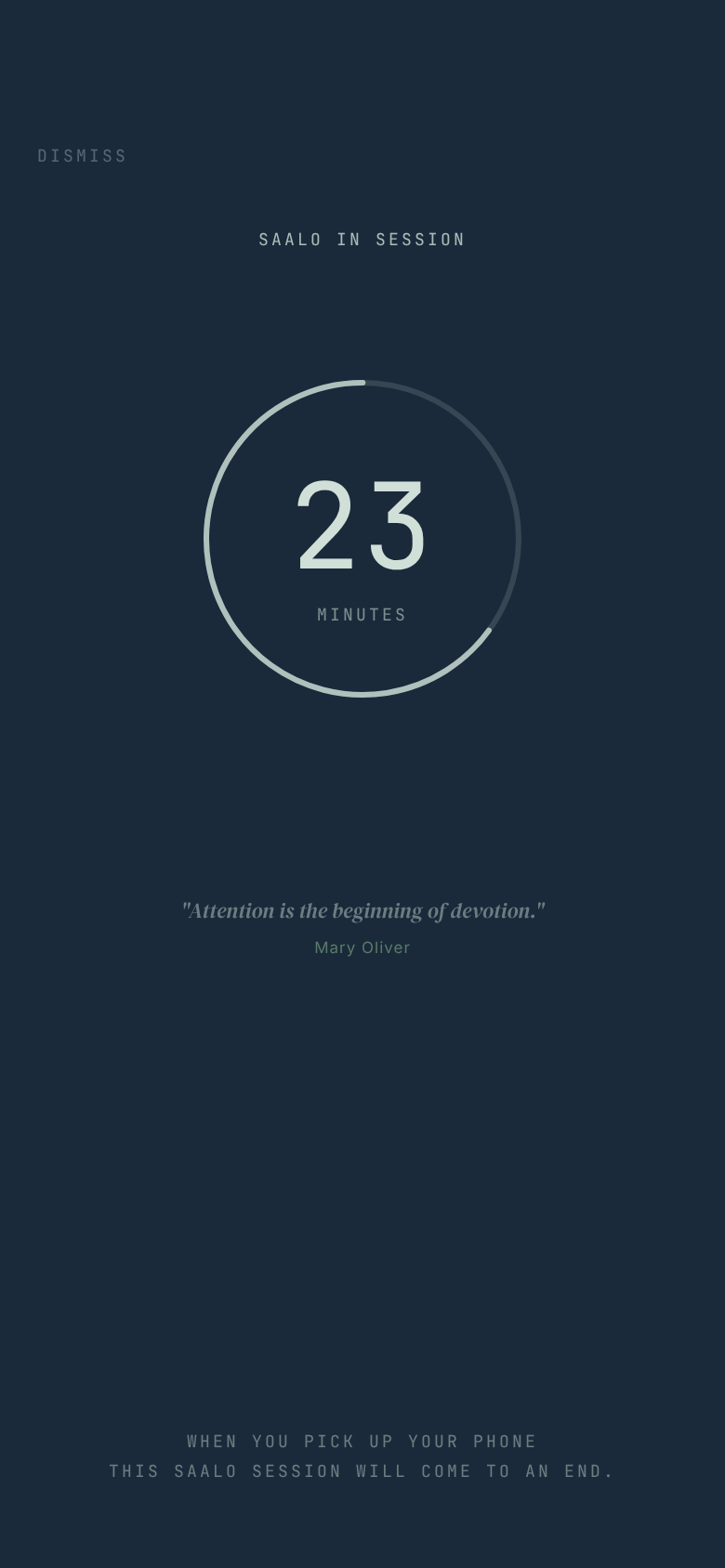
You open the lid, place your phone inside and close it. That's when your session starts, automatically. When you take the phone out, it ends. The free Saalo app counts your time away from your phone, and if you wear an Oura ring, it shows how your sleep and stress respond on the days you step away.
We built it this way because plenty of people don't want to be locked out of their own phone. They want a good place to put it, and a way to see that the time was worth it. It comes in four finishes (Wood, Ceramic, Metal and Sustainable) and is meant to sit out in the open, like something you chose for your home.
- Price: the Saalo app is free. The Box is available by waitlist with a $50 refundable deposit, and we'll share its price before it ships.
- Good for: people who want a habit and a record of it, more than a lock.
- Trade-off: nothing stops you from opening the lid. If you need to be physically kept out, a timed box is the better fit.
Yondr pouch
You've probably seen these at concerts or schools. The phone goes in a fabric pouch that snaps shut with a magnetic lock, and it only opens when you touch it to a separate unlocking base.
Yondr is built mainly for venues and schools, but individual pouches can be bought.
- Good for: households that want the phone with them but unusable, like on a family outing.
- Trade-off: someone has to hold the base, so it works better as a family rule than a personal one. It's also the least "at home" option on the list.
Which one suits you best
No option is objectively better than another. It depends on what keeps pulling you back to the phone. If you're still deciding between a box, a dumbphone and an app, our guide to the difference between a dumbphone, an app blocker and a phone box walks through all three.
- If you'll cheat if there's any way out: kSafe. No overrides, no arguments.
- If you want to step away for days at a time: the Mindsight box, with its 30-day timer.
- If you just want to try the idea with something simple: a timed phone jail.
- If you want it to feel like part of your home, and you'd like to see what the time does for you: the Saalo Box. It's especially good for evenings, which is where phone-free time shows up most clearly in your sleep.
- If you're setting a rule for the whole family on the go: Yondr pouches.
Whichever you choose, the box itself is only half of it. The other half is deciding when the phone goes in. One evening a week is a perfectly good start.
If the Saalo Box sounds like your kind of thing, you can join the waitlist at saalo.co/shop whenever you're ready.