Difference between a dumbphone, an app blocker and a phone box
"I want to use my phone less, but I have no idea where to start. Do I ditch it? Download something? Lock it up?"
If that sounds familiar, you're far from alone. Almost everyone owns one now: 91% of U.S. adults have a smartphone, according to the Pew Research Center's 2026 figures (Pew Research Center, 2026). And a growing number of us are looking for a way to put it down more often.
The trouble is that the options all sound similar and work completely differently. Today we'll walk through the three main ones (a dumbphone, an app blocker and a phone box), what each one really asks of you, and who each one suits.
What a dumbphone is
A dumbphone is a basic phone that does calls and texts, and not much else. Think flip phones, or the newer minimalist phones with a black-and-white screen.
Some people switch completely. Others keep their smartphone in a drawer and carry the dumbphone on weekends.
It's the cleanest break you can make. There's nothing to scroll, so there's nothing to resist.
The catch is everything you lose along the way. Maps, banking, boarding passes, the parking app, two-factor codes, the group chat with your kids' school. For a lot of people, that's where the experiment ends after a week or two.
What an app blocker is
An app blocker is software on your smartphone that limits the apps you choose. Apple's Screen Time is the one most people start with, and there are dozens of others, each with its own twist: timers, pauses before an app opens, schedules, even a physical tag you tap to unlock.
You keep everything useful about your phone and fence off the parts that pull you in.
It's also the easiest thing to undo. The way out lives on the same screen as the problem. If you've ever raised your own limit from one hour to two at 10 p.m., you know exactly what we mean. We go through the main options in our guide to the best app blockers for iPhone.
What a phone box is
A phone box is a physical place for your phone to go. Some lock on a timer, some don't lock at all. The idea is simple: put the phone somewhere else for a while and let distance do the work.
You keep your smartphone and all its apps. You just stop carrying them around every minute of the day.
The obvious limit is that a box only helps when you use it. It won't do anything about the scrolling you do on the train. Our roundup of phone lock boxes for the home covers the different styles.
Main differences between them
The easiest way to see it is side by side.
| Dumbphone | App blocker | Phone box | |
|---|---|---|---|
| What you give up | Almost all apps, including the useful ones | Only the apps you choose, while the block is on | Nothing, for the time the phone is put away |
| How easy to undo | Hard. You'd have to switch phones back | Very easy. Usually a tap or two | Depends. Timed boxes lock you out; others open any time |
| Where it works | Everywhere you go | Everywhere you go | At home, wherever the box is |
| Cost | A second phone, from inexpensive to a few hundred dollars | Free (Screen Time) to a yearly subscription | From $59 for a timed box like kSafe |
| Best for | A full reset, or weekends away | Cutting specific apps while keeping your phone | Protecting set times of day, like evenings and meals |
A few things stand out:
- A dumbphone changes your whole day. The other two change parts of it.
- An app blocker is the only one that travels with you. That's its strength and its weakness.
- A phone box is the only one that puts real distance between you and the phone. For a lot of people, that turns out to matter more than any setting.
Which one suits each type of person best
There's no right answer for everyone, and plenty of people end up combining two. Here's a rough guide.
- If your phone runs your work and family life: keep the smartphone. A phone box for evenings and meals protects the hours that matter most without cutting you off.
- If one or two apps are the whole problem: start with an app blocker. Be honest with yourself about whether you'll override it, though. If you keep catching yourself picking up the phone without meaning to, why you keep checking your phone is worth a read before you choose.
- If you've tried apps and they never stick: go physical. A box takes the decision out of your hands.
- If you want a complete reset: try a dumbphone for a weekend before committing. You'll quickly learn which apps you truly need.
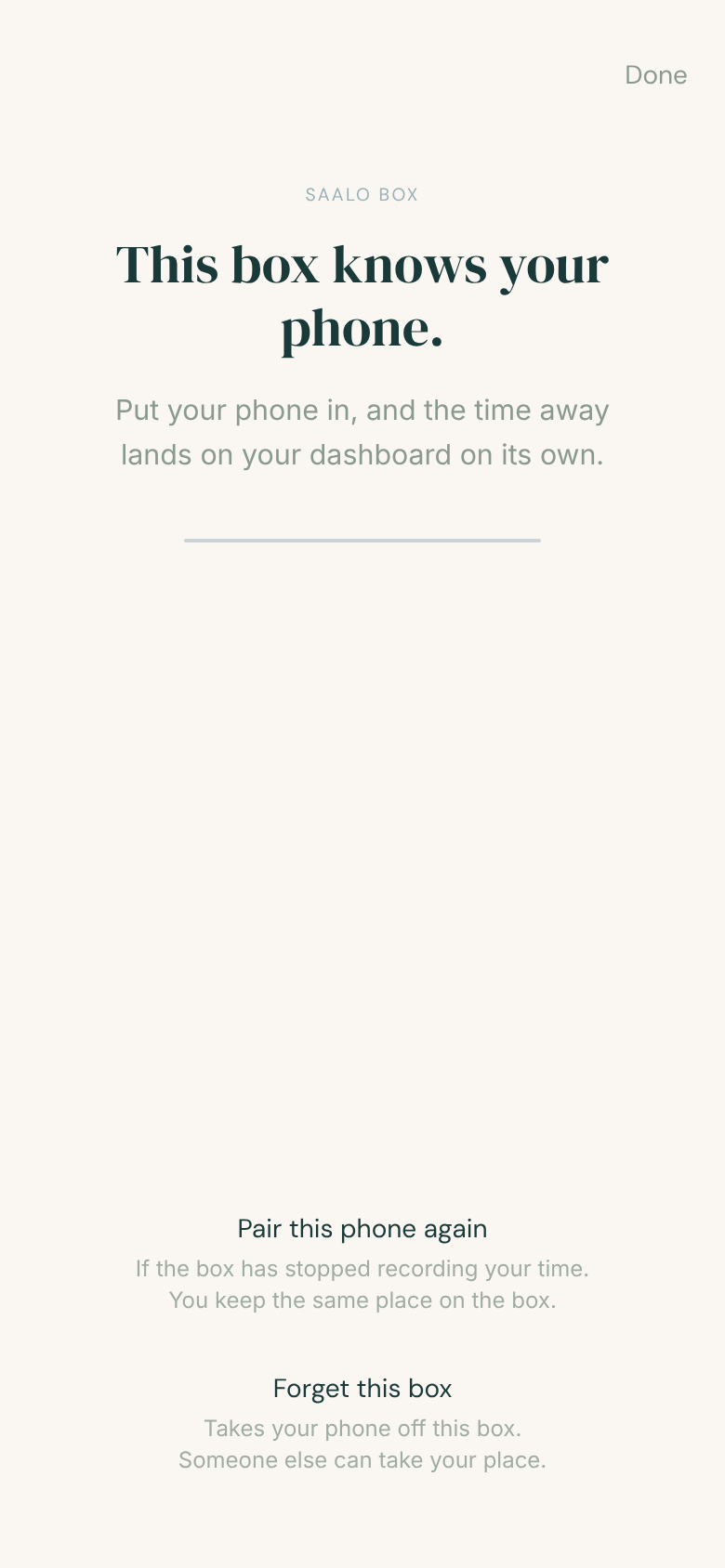
- If you'd like to see what the time away actually does for you: that's why we built Saalo. The free Saalo app counts your time away from your phone, and the Saalo Box starts a session on its own when you close the lid. If you wear an Oura ring, you can see how your sleep and stress respond.
The best tool is the one you'll still be using next month.