What happens when you use your phone less
"The first two days, I kept reaching for my pocket. By the end of the week, I'd read half a book."
That's roughly how it goes for a lot of people. What makes using your phone less hard is how automatic the habit is. Once you know what to expect, it gets a lot easier.
Here's what the first few weeks usually look like, and what tends to change along the way.
The first few days: restless
Expect to feel a little twitchy. You'll reach for your phone in the line at the store, at red lights, in the gap after you finish a task. Your hand knows the way even when your head has decided otherwise.
This is completely normal. It's the habit looking for its usual reward, and it means the change is working. We explain where the urge comes from in why do I keep checking my phone?
Some people also notice a little worry about missing something. A message, a news story, a group chat. In practice, very little that arrives in an hour can't wait for the next hour.
The first week: quieter
Somewhere around the end of the first week, the reaching slows down. You start to notice things you used to skip past: the light in the kitchen, the sound of the house, a thought you actually get to finish.
Boredom shows up, and that's a good sign. Boredom is where daydreaming, ideas and plans tend to come from. It just takes a few days to remember that.
A few weeks in: better
By the second or third week, people usually describe the same handful of changes:
- More time than you expected. Ten minutes here and twenty there add up fast.
- Easier conversations. You're actually listening, and the people around you notice.
- Calmer evenings. Less scrolling late at night usually means falling asleep sooner.
- Longer focus. Reading a chapter, finishing a task, watching a whole movie without checking.
- Less guilt. You stop feeling like you're always behind.
What changes in your body
If you wear a ring or a watch, you may see some of this in your numbers. In my own Oura data, the clearest changes have come from phone-free time at lunch, where my restorative time went up, and in the evening, where I fell asleep faster. It's one person's data and still early, but it's encouraging, and it lines up with what researchers have found about phones and sleep.
How to get through the first week
- Start small. One window a day. Breakfast, lunch or the last hour before bed.
- Give the phone a home. Somewhere out of reach. Out of sight works much better than face down.
- Have something ready. A book, a walk, a puzzle. The urge passes faster when your hands are busy.
- Turn off what you don't need. Fewer notifications means fewer reasons to pick it up.
- Tell someone. It's easier when the people you live with know what you're trying.
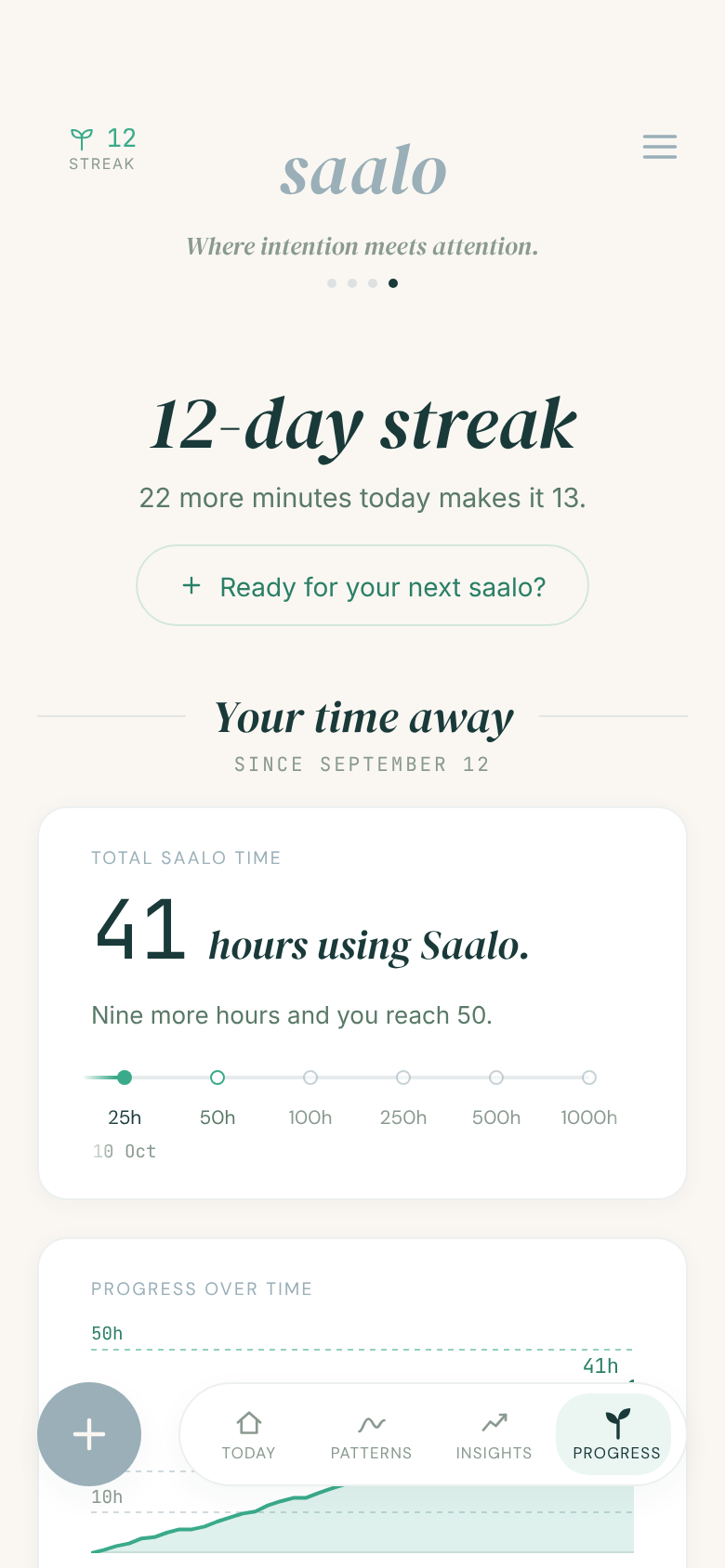
- Watch it add up. The Saalo app counts your time away from your phone, so you can see the minutes grow from week to week. If you wear an Oura ring, it shows how your own sleep and stress respond.
The first few days are the hardest part, and they pass. Pick your first window, and start today.