How to set a good phone example for your kids
"Why do I have to put mine away when you're always on yours?"
If your child has ever said this to you, it probably stung a little. It stings because they have a point.
You're far from the only parent in this spot. In a 2020 Pew Research Center survey, 68% of U.S. parents said they at least sometimes feel distracted by their phone when they're spending time with their kids (Pew Research Center, 2020).
Most of us use our phones for real things: work, school emails, the family calendar, directions. So leave the guilt aside. The goal is to notice what our kids see, and make a few small changes they can copy.
Why kids copy what we do
Children learn most habits by watching. How we eat, how we talk when we're upset, how we handle a boring moment in a waiting room. Phones are no different.
If the phone comes out every time there's a pause, that's the lesson. Kids notice where our eyes go during dinner, at the playground and in the car. They notice whether we look up when they start talking.
The good news works the same way. When they see you read a book, go for a walk without your phone, or put it away when they're telling you something, that sticks too.
What your kids actually notice
Here are the moments that tend to matter most:
- When they're talking to you. Looking up from the screen tells them they matter more than whatever's on it.
- Meals. It's the most visible family routine there is.
- The first and last minutes of the day. Waking up and going to bed are when kids are most tuned in to you.
- Waiting. In line, in the car, at the doctor's office. These are the moments kids learn what to do with boredom.
How to set a good example, without giving up your phone
Say what you're doing out loud. "I'm just checking the directions" or "I'm answering Grandma." Your kids can tell the difference between a tool and a scroll, especially when you name it.
Give the phone a home. A shelf or a box near the door where it lives when you're home. Kids will see it there more than they'll see it in your hand.
Pick one or two phone-free times as a family. Meals are the easiest place to start. We have a guide on keeping phones off the dinner table. Evenings are a great second step: here's how to spend them without your phone.
Let them catch you being bored. Sit on the porch. Stare out the window. It's one of the most useful things you can show a child.
Keep the rules the same for everyone. If phones don't go to the table, that includes yours. Kids are very good at spotting a double standard.
Don't aim for perfect. You'll slip. Say so, laugh about it, and put it away. That's a good lesson too.
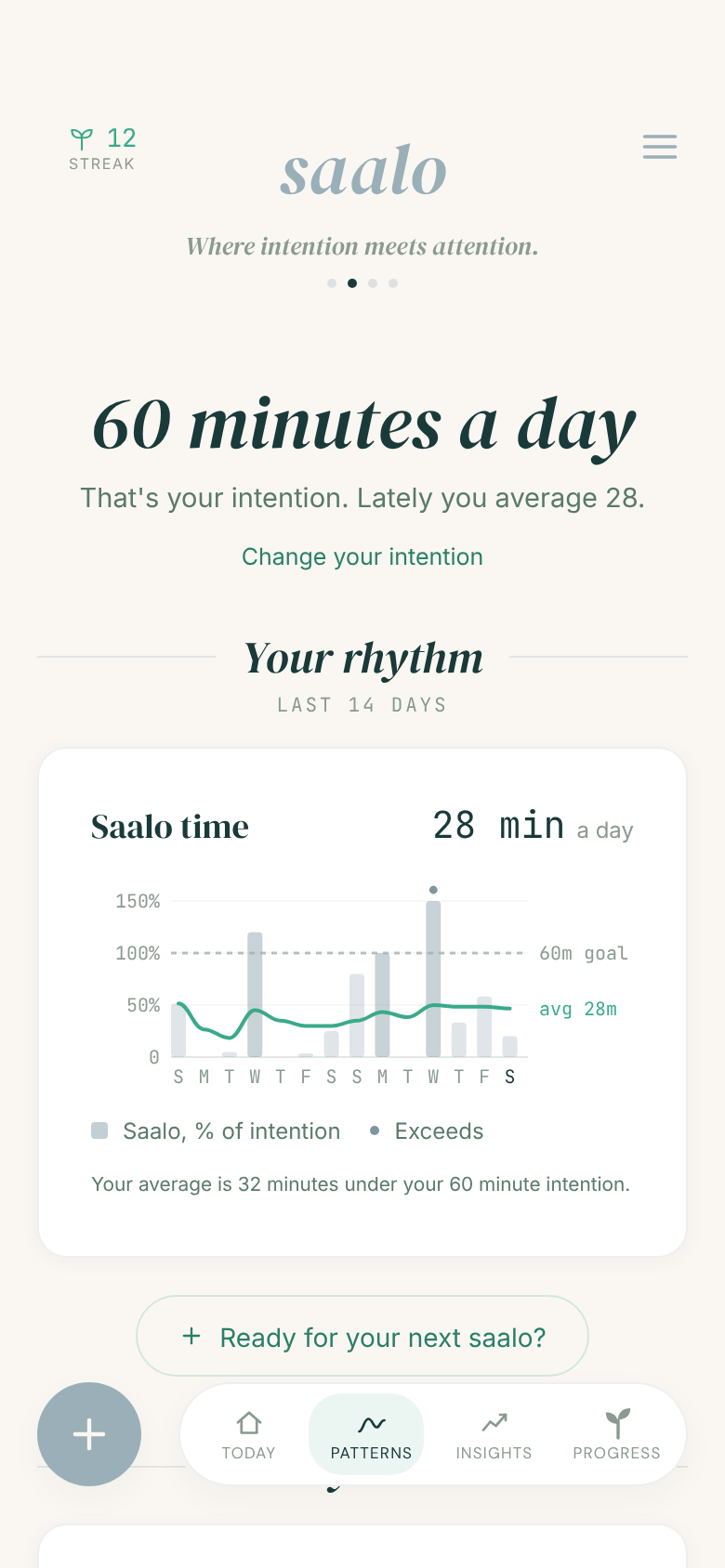
Count your own time away. Saalo isn't designed for kids, but it can help you. The Saalo app counts the time you spend away from your phone, so you can see whether your phone-free family time is actually growing week to week.
Our kids won't remember the emails we answered. They'll remember whether we looked up.